
The Conscious Mind and Its Infinite Horizons
Exploring the Intersections of Psychology, Philosophy, and Neuroscience.
The Historical Quest to Understand Consciousness
For thousands of years, thinkers have tried to answer one of humanity’s most enduring questions: what does it mean to be conscious? In ancient Greece, philosophers such as Plato and Aristotle began to speculate about the soul, perception, and rationality. Centuries later, Descartes posed his famous statement, “I think, therefore I am,” cementing the mind as a central concern of philosophy. Meanwhile, spiritual traditions across Asia developed their own frameworks, linking awareness with meditation and enlightenment. These early explorations laid the groundwork for psychology and neuroscience, which emerged as scientific disciplines seeking to explain the same mysteries with empirical tools. The dialogue between these fields has shaped the ongoing pursuit of consciousness, weaving together subjective experience and objective study.
The Brain as a Living Network
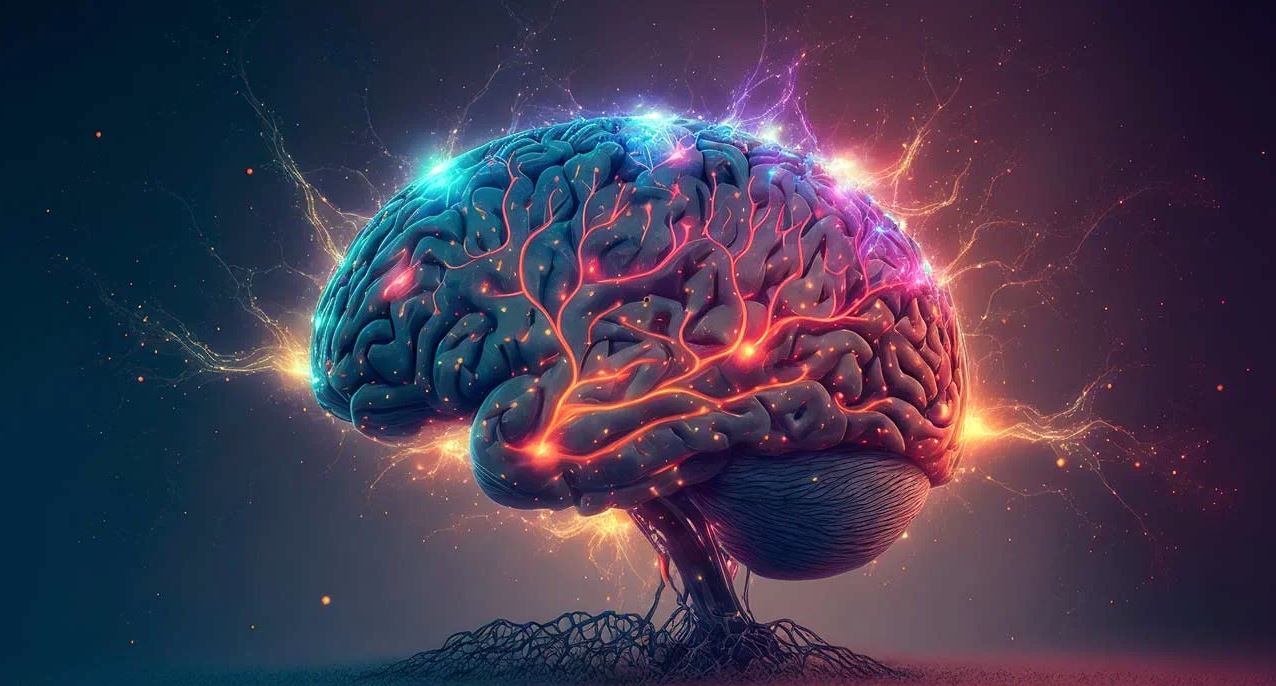
Modern neuroscience has revealed that the brain is not a static organ but a dynamic, ever-changing network of billions of neurons firing across trillions of connections. Synapses strengthen and weaken in response to learning, an adaptive process called plasticity. From the firing of sensory neurons that allow us to perceive light, sound, and touch, to the deeper neural circuits that shape memory and emotion, the brain functions as a living web of electrical and chemical exchanges. This complexity suggests that consciousness is not located in one single region but emerges from the interplay of many systems. The brainstem regulates wakefulness, the prefrontal cortex governs decision-making, and the limbic system colors our experiences with feeling. Together, these systems create the unified sense of “self” that we often take for granted.
Philosophy and the Hard Problem of Consciousness
Even with immense progress in neuroscience, the philosophical “hard problem” of consciousness remains unsolved. How do electrochemical signals translate into the vivid richness of subjective experience? Why does the firing of neurons feel like color, sound, or emotion rather than mere activity? Philosophers such as David Chalmers argue that there may always be a gap between explaining the mechanisms of the brain and explaining the essence of experience itself. This raises profound questions about whether consciousness is reducible to biology or if it hints at something beyond material explanation. The hard problem forces us to confront the limits of human knowledge and invites humility in the face of the unknown.
The Psychology of Self and Identity
While philosophy and neuroscience often focus on abstract explanations, psychology asks how consciousness shapes our everyday lives. Identity is one of its most central concerns. From early childhood, we begin to construct a narrative of who we are, influenced by memory, culture, and social interaction. Cognitive psychology has shown how memory forms the backbone of identity, stitching together fragments of the past into a coherent story. Social psychology reveals how others’ perceptions feed into our self-concept, making identity a collaborative process rather than a solitary one. Even our unconscious mind, filled with biases, instincts, and hidden drives, shapes who we believe ourselves to be. Psychology reminds us that consciousness is not only about awareness of the world but about awareness of ourselves within it.
Neuroscience of Emotion and Decision-Making
Emotion plays a critical role in how humans think and act. Far from being irrational forces to be overcome, emotions are biological signals that guide behavior. Neuroscientists have discovered that decision-making relies heavily on emotional input, with the amygdala, orbitofrontal cortex, and other brain structures evaluating risks and rewards. Patients with brain damage in these regions often struggle to make even simple choices, showing that pure logic is not enough. Emotions provide a compass, directing us toward what matters most in a given context. Understanding this interplay has transformed fields ranging from behavioral economics to therapy, showing that the rational and emotional mind cannot be separated.
The Influence of Technology on the Mind
As digital technologies become embedded in daily life, they also reshape human consciousness. Smartphones, social media, and artificial intelligence influence how we pay attention, remember, and communicate. Some neuroscientists warn of shortened attention spans, while others suggest that the brain is adapting to new forms of cognitive multitasking. Philosophers debate whether digital identities create new extensions of the self or fragment us into competing versions. Meanwhile, psychologists examine the effects of online interaction on mental health, particularly in young people. Technology is not simply a tool but an environment in which consciousness now evolves, raising both opportunities and risks for the future of the human mind.
The Future of Consciousness Studies
The study of consciousness is rapidly advancing with new tools such as brain imaging, artificial intelligence models, and cross-disciplinary collaboration. Scientists are mapping neural correlates of awareness, attempting to detect signs of consciousness in patients who cannot communicate, and exploring whether machines might one day exhibit something akin to awareness. Philosophers are challenging assumptions about the nature of reality itself, while psychologists are designing therapies that integrate mindfulness, cognitive science, and emotional resilience. The future will likely bring more integration between fields, with the potential to answer age-old questions while also creating new ones. Consciousness remains both the most intimate and the most mysterious aspect of human existence.
Consciousness as a Shared Journey
The quest to understand the conscious mind is not confined to laboratories or libraries. It is a human endeavor that touches every life, uniting science, philosophy, and lived experience. Whether through neuroscience uncovering the brain’s architecture, philosophy probing the meaning of awareness, or psychology exploring identity and behavior, each perspective adds depth to the picture. Consciousness may never be fully explained, but its study continues to inspire wonder, humility, and creativity. Ultimately, the exploration of the mind is also an exploration of ourselves, reminding us that the search for understanding is as important as the answers we may find.